
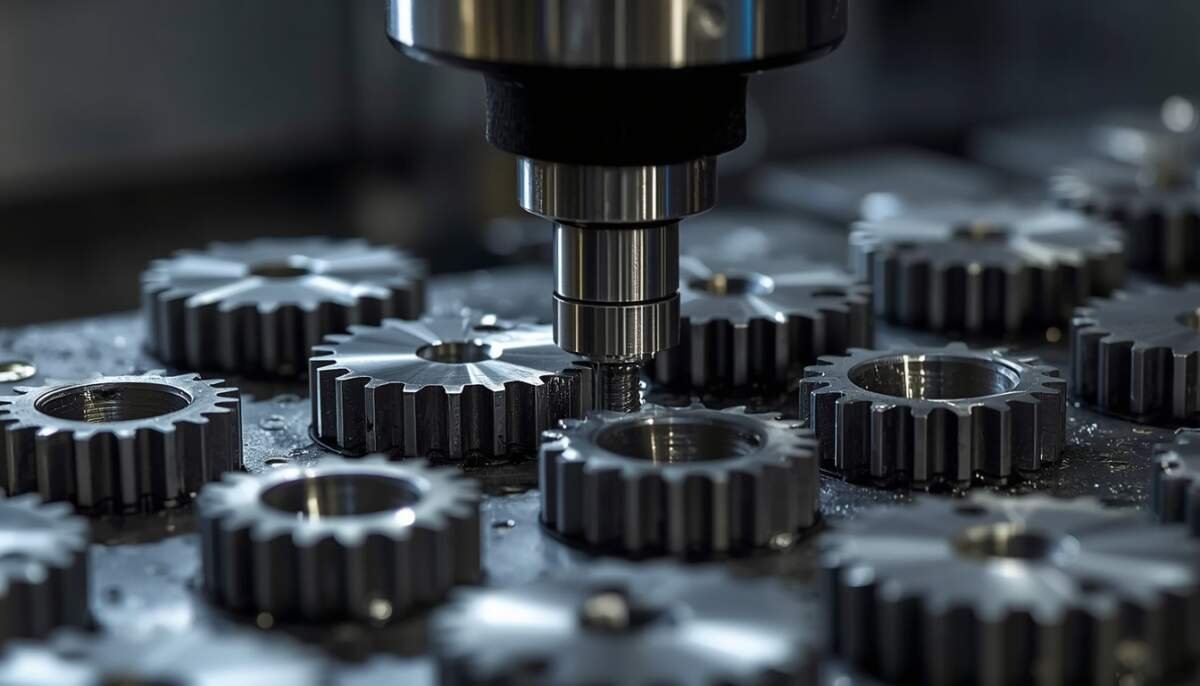

In modern manufacturing, precision gear production is essential for ensuring the smooth operation of machinery, automotive systems, aerospace equipment, and industrial transmission systems. To achieve high-quality gear manufacturing, industries rely heavily on advanced Gear Cutters that deliver exceptional precision, efficiency, and durability.
With the rapid advancement of CNC machining and industrial automation, gear cutting technologies have evolved significantly. Modern gear cutters are designed to improve machining accuracy, increase productivity, reduce downtime, and optimize overall manufacturing performance.
Industries such as automotive, aerospace, heavy engineering, robotics, and energy production depend on high-performance gear cutting tools to meet strict quality and production standards.
What Are Gear Cutters?
Gear Cutters are specialized cutting tools used to manufacture gears with accurate tooth profiles and precise dimensions. These tools are designed to shape gear teeth through various machining operations including:
- hobbing,
- shaping,
- milling,
- broaching,
- and grinding.
Gear cutters are commonly manufactured using:
- high-speed steel (HSS),
- carbide,
- cobalt alloys,
- and advanced coated materials.
Modern CNC gear cutting machines use highly precise cutters to produce gears with:
- smooth surface finishes,
- accurate tooth geometry,
- and consistent performance.
Importance of Gear Cutters in Industrial Manufacturing
Gears are critical components in countless industrial systems. Poorly manufactured gears can lead to:
- mechanical failures,
- excessive vibration,
- noise,
- and reduced equipment lifespan.
Advanced gear cutters help manufacturers maintain:
- high dimensional accuracy,
- improved tooth consistency,
- and excellent machining efficiency.
High-quality gear cutting tools also support:
- faster production cycles,
- reduced machining errors,
- and lower operational costs.
As industries demand higher performance and tighter tolerances, the importance of precision gear cutters continues to grow.
Types of Gear Cutters Used in CNC Machining
Different gear manufacturing processes require different types of gear cutters.
Gear Hobs
Gear hobs are among the most widely used gear cutting tools. They are ideal for:
- spur gears,
- helical gears,
- splines,
- and worm gears.
Hobbing is highly efficient for mass gear production because it offers:
- continuous cutting action,
- faster machining,
- and high accuracy.
Gear Shaper Cutters
Gear shaper cutters are commonly used for:
- internal gears,
- external gears,
- and complex gear profiles.
These cutters are suitable for applications where hobbing may not be practical.
Form Milling Cutters
Form milling cutters are designed for producing gears with specific tooth profiles. They are commonly used in:
- low-volume production,
- repair work,
- and custom gear manufacturing.
Broaching Tools
Broaching tools are used for high-precision internal gear cutting operations. They are commonly used in automotive and aerospace industries.
Grinding Cutters
Gear grinding tools provide ultra-fine surface finishes and high precision for hardened gears used in high-performance applications.
Industrial Benefits of Advanced Gear Cutters
Improved Machining Accuracy
Modern gear cutters are engineered with advanced geometries that improve:
- tooth profile accuracy,
- dimensional consistency,
- and cutting stability.
This ensures smooth gear operation and minimizes transmission errors.
Higher Production Efficiency
Advanced gear cutting tools support:
- higher cutting speeds,
- faster feed rates,
- and reduced machining cycles.
Manufacturers can increase production output while maintaining high-quality standards.
Enhanced Tool Life
Modern coatings such as:
- TiAlN,
- TiCN,
- and multi-layer coatings
help improve:
- wear resistance,
- heat resistance,
- and cutting durability.
Longer tool life reduces replacement costs and machine downtime.
Better Surface Finish
Precision gear cutters create smoother gear tooth surfaces, which helps:
- reduce friction,
- minimize noise,
- and improve gear efficiency.
High-quality surface finishes are especially important in automotive and aerospace applications.
Reduced Manufacturing Costs
Efficient cutting performance reduces:
- material waste,
- production downtime,
- energy consumption,
- and maintenance costs.
For large-scale manufacturing operations, these cost savings can significantly improve profitability.
Applications of Gear Cutters Across Industries
Automotive Industry
The automotive sector heavily relies on gear cutters for manufacturing:
- transmission gears,
- differential gears,
- steering systems,
- and engine components.
Precision gear manufacturing is critical for vehicle performance and durability.
Aerospace Industry
Aerospace manufacturers use advanced gear cutters to produce:
- turbine gears,
- landing gear systems,
- and high-precision aerospace components.
The industry demands extremely tight tolerances and superior reliability.
Industrial Machinery
Heavy industrial machinery requires durable gears for:
- power transmission,
- conveyor systems,
- and hydraulic equipment.
Gear cutters ensure reliable gear performance under heavy operating conditions.
Robotics and Automation
Modern robotics systems require compact and highly accurate gears. Precision gear cutters help produce gears used in:
- robotic arms,
- automation equipment,
- and motion control systems.
Energy Sector
Gear cutters are widely used in manufacturing gears for:
- wind turbines,
- power generation systems,
- and industrial energy equipment.
How to Choose the Right Gear Cutters
Selecting the right gear cutter depends on several factors, including:
- gear type,
- material hardness,
- production volume,
- machine capability,
- and required precision level.
Manufacturers should also consider:
- cutter material,
- coating technology,
- cutting speed,
- and tool geometry.
High-performance carbide gear cutters are often preferred for demanding industrial applications.
Future of Gear Cutters in Modern Manufacturing
The future of Gear Cutters is closely linked with advancements in:
- CNC automation,
- Industry 4.0,
- AI-driven manufacturing,
- and smart machining technologies.
Modern manufacturers are increasingly adopting:
- customized gear cutting solutions,
- advanced coatings,
- and precision-engineered tool geometries.
These innovations are helping industries achieve:
- higher efficiency,
- better product quality,
- and improved manufacturing consistency.
Conclusion
Advanced Gear Cutters play a vital role in optimizing industrial machining and precision gear manufacturing. Their ability to deliver high accuracy, superior surface finishes, and increased production efficiency makes them essential in automotive, aerospace, robotics, heavy engineering, and energy industries.
As CNC machining technologies continue to evolve, modern gear cutters will remain critical for improving manufacturing productivity, reducing operational costs, and maintaining high-performance industrial systems.
Leave a Comment