
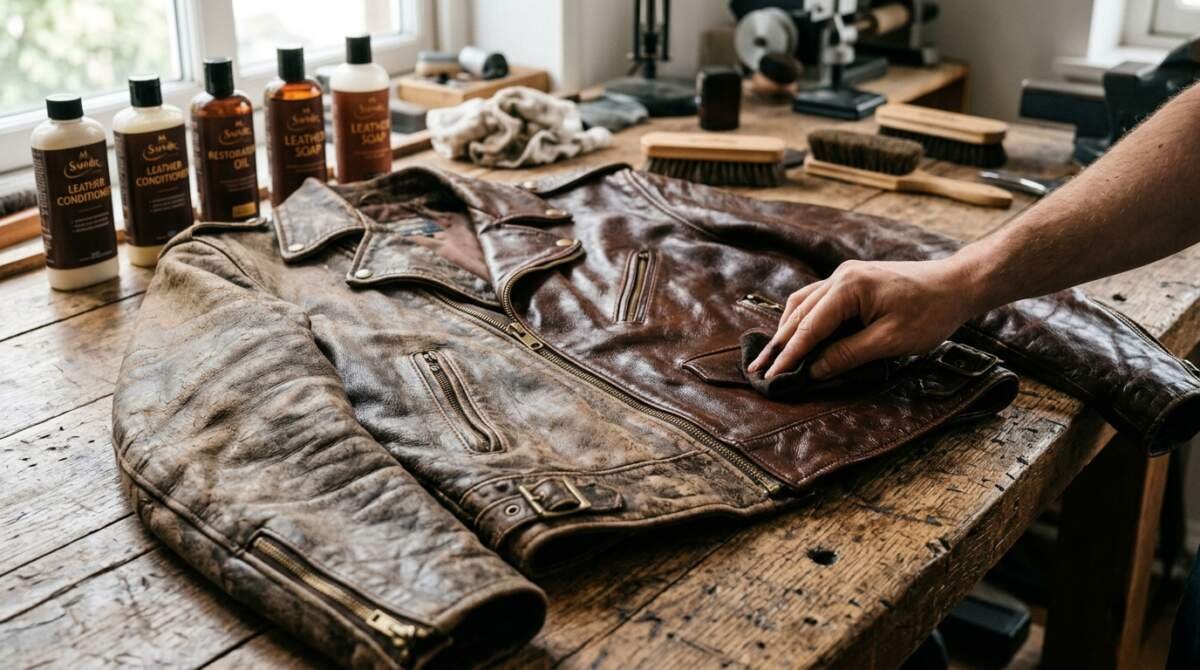

Let me be real with you. A few months back, I found my old leather jacket at the back of the wardrobe. It had been through a wash cycle by accident, and honestly, it looked like a disaster. Stiff, faded, and cracked in places. I almost threw it out.
But I did not. And I am glad I did not.
After hours of testing different products and methods, I managed to bring it back to nearly its original state. This guide is everything I learned, written for anyone dealing with the same problem.
What Actually Happens When Leather Gets Washed
Leather is a natural material. When it goes through a washing machine or gets soaked in water, a few things happen fast:
• Natural oils are stripped out, leaving the leather dry and brittle
• The fibres contract and stiffen as the leather dries
• Surface dyes can fade or bleed unevenly
• Stitching may weaken or warp
• The lining can shrink or separate from the leather panels
Quick facts worth knowing:
• Leather loses up to 40% of its natural moisture after a machine wash
• Without treatment, cracking can start within 2 to 4 weeks of drying
• Most full-grain leather jackets can be restored if treated within 30 days of damage
• Genuine bonded leather has a much lower success rate for restoration compared to top-grain or full-grain
What You Will Need Before Starting
• Mild leather cleaner or saddle soap
• Leather conditioner (mink oil or a dedicated conditioner like Leather Honey)
• Soft microfiber cloths (at least three)
• A leather colour restorer or dye if fading is severe
• A soft-bristle brush
• Leather finish spray or wax (optional but recommended)
• Warm water and a bowl
Step-by-Step: How to Restore a Washed Leather Jacket
Step 1: Let It Dry Naturally First
Do not apply anything while the jacket is still damp. Let it air dry at room temperature, away from direct sunlight and heat sources. This can take 24 to 48 hours.
Hanging it on a wide hanger during drying helps maintain the shoulder shape.
Step 2: Clean the Surface
Once fully dry, use a soft brush to remove any surface dust or dirt. Then take a damp cloth with a small amount of saddle soap or leather cleaner and gently wipe the entire jacket in circular motions.
Do not scrub. You are lifting residue, not stripping the leather further.
Step 3: Condition the Leather Deeply
This is the most important step. The jacket needs moisture back inside the fibres. Apply a generous amount of leather conditioner using a clean cloth and work it into every panel, including seams and crevices.
Leave it to absorb for at least 30 minutes, then buff gently with a dry cloth.
For severely damaged jackets, repeat this process two or three times over 48 hours.
Step 4: Address Colour Fading
If your jacket has lost its colour or looks patchy, a leather colour restorer can make a huge difference. For black or dark jackets, a black leather dye applied with a sponge in thin, even layers works well.
By the way, if you want to explore more about washed leather jackets and what makes them special, Leather Jacket Black has a solid collection worth checking.
Step 5: Restore the Finish
Once the colour is sorted, apply a leather finish spray or paste wax to add a light protective layer. This brings back the subtle sheen and helps repel moisture going forward.
Buff with a dry microfiber cloth using long, smooth strokes.
Step 6: Final Stretch and Shape
Leather that dried stiff can be gently stretched back into shape by hand. Wear the jacket for short periods while it is still slightly warm from conditioning. This moulds it back to your body shape naturally.
A Note on Textured Leather Jackets
If your jacket has embossed or debossed patterns, the restoration process needs a bit more attention. These textures sit on or pressed into the leather surface, and harsh cleaning can blur them.
The difference between deboss vs emboss leather matters here. Embossed patterns are raised above the surface, while debossed ones are pressed inward. Both need gentle, targeted conditioning to preserve the definition of the design.
Use a soft brush to work conditioner into the pattern grooves. Avoid thick waxes that can fill in and obscure the detail.
Common Mistakes to Avoid
• Using household cleaners or dish soap on leather
• Drying the jacket near a radiator, dryer, or in direct sunlight
• Applying conditioner to still-damp leather
• Over-applying dye without testing on a hidden patch first
• Skipping the conditioning step and going straight to finishing
How to Prevent This From Happening Again
• Store your jacket in a cool, dry place with good airflow
• Use a leather protector spray every 3 to 6 months
• Spot-clean small stains immediately rather than soaking the jacket
• Take it to a professional dry cleaner experienced with leather when deep cleaning is needed
• Never leave it in a bag or plastic cover for extended periods
FAQs
Can all leather jackets be restored after washing?
Most genuine leather jackets, especially full-grain and top-grain, can be restored with the right products and patience. Bonded or faux leather has very limited recovery potential. The sooner you start treatment after the damage, the better the results.
How long does the restoration process take?
A basic clean and condition takes about 2 to 3 hours of active work. Factor in drying time between steps, and the whole process can take 2 to 3 days to complete properly.
Is it worth restoring an old washed leather jacket or should I just buy a new one?
If the jacket is genuine leather and the damage is mainly surface-level dryness and fading, restoration is absolutely worth it. A quality leather jacket can last decades with proper care. Replacing it with something of the same quality would cost significantly more.
What conditioner works best for washed leather?
Leather Honey, Bickmore Bees Wax Rich Conditioner, and Chamberlain’s Leather Milk are all trusted options. Mink oil is also effective but can slightly darken light-coloured leather, so test first.
Can I restore the jacket myself or do I need a professional?
Most restoration work can be done at home with the right products. However, if the leather is severely cracked, has structural damage, or the lining is badly separated, a professional leather repair service gives better results and can fix things home treatments cannot.
Final Thoughts
Restoring a washed leather jacket is not complicated once you know what you are doing. The key is patience, the right products, and working through the steps properly without rushing.
Leather is resilient. Even a jacket that looks done for can come back to life with a bit of care and the right approach. So before you think about throwing it out, give restoration a proper shot.
You might be surprised how good it looks on the other side.
Leave a Comment