
India’s beer market grew at 8.3% CAGR between 2018 and 2023, with strong beer accounting for over 80% of total beer volumes sold. Young Indians are driving this shift. They want more from their beer stronger flavour, higher alcohol content, and a price point that fits their budget.
This post explains why STOK strong beer India has built traction among millennial and Gen Z drinkers, what the broader category trends look like, and how strong beer fits into a fast-changing consumer culture.
What Is STOK Strong Beer and Why Is It Popular in India?
STOK strong beer is a high-alcohol lager positioned at India’s value-premium segment. It combines a clean, malt-forward profile with an alcohol content that meets the expectations of the strong beer category. Young consumers across urban India have taken to it because it delivers consistent quality at a competitive price.
Strong beer in India typically carries 6–8% ABV, compared to 4–5% for regular lagers. That difference matters to the price-conscious buyer who drinks socially. One bottle replaces two for many consumers, which makes strong beer inherently better value.
Urbanisation is a key driver here. According to the United Nations, India’s urban population is projected to reach 600 million by 2031. More young people in cities means more disposable income, more social drinking occasions, and more brand awareness through organised retail and bars.
The Rise of the Value-Premium Beer Drinker
Young Indian consumers do not want to choose between quality and price. They seek products that feel premium but don’t break the bank. Strong beer fills that gap exactly. It sits above mass-market lagers in perception but below imported craft beers in price.
This positioning resonates with the 22–35 age group, which now accounts for the largest share of beer drinkers in India. They shop for experiences, not just products.
Social Drinking Norms Are Shifting
Peer influence and social media have accelerated beer discovery among young Indians. Platforms show product imagery, bar culture, and lifestyle associations. Brands that appear in the right contexts live music, sports viewing, casual dining earn visibility that translates to trial.
Strong beer benefits from this because it is inherently associated with a more mature, confident drinking identity. It is not a session beer. It signals intent.
Distribution and Retail Availability
A brand’s popularity depends on where it shows up. STOK strong beer has grown its presence across modern trade supermarkets, convenience chains, and licensed alcohol outlets. This visibility in organised retail has been a significant growth lever, particularly in tier-1 and tier-2 cities.
What Alcohol Content Does STOK Strong Beer Have?
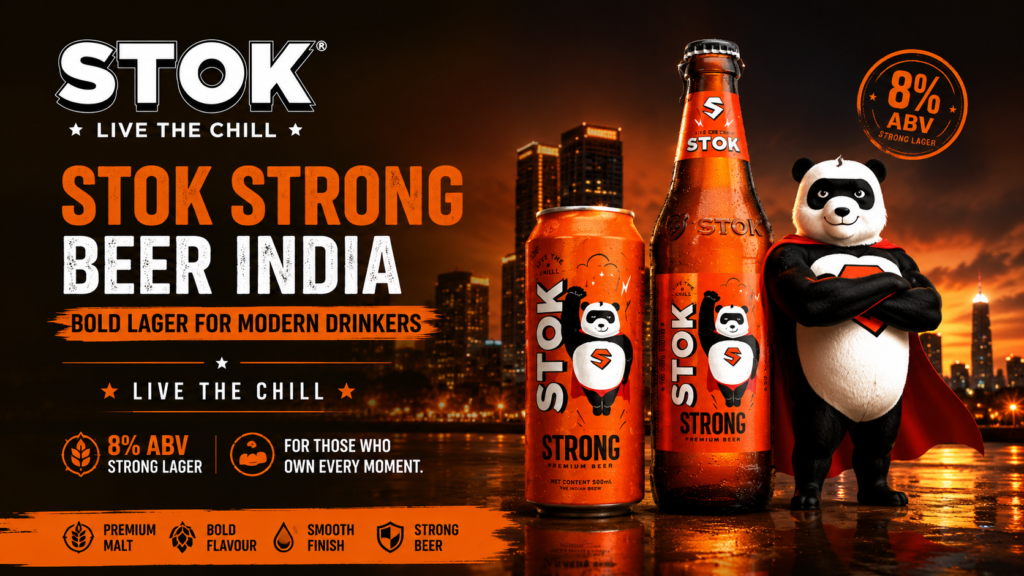
STOK strong beer carries an alcohol by volume (ABV) consistent with the strong lager segment in India, which typically ranges between 6% and 8%. This positions it squarely within what Indian consumers expect from a strong beer enough potency to justify the category, without compromising on drinkability.
ABV is a purchase driver in the Indian beer market. Research from the International Journal of Drug Policy found that alcohol strength influences purchase decisions for price-sensitive consumers in emerging markets, particularly among younger male drinkers.
How ABV Shapes Consumer Choice in India
In a market where value is the primary purchase driver, ABV per rupee is a metric many consumers compute instinctively. Strong beer delivers more alcohol content per bottle than standard lagers. For social occasions where multiple rounds are common, this matters.
The Indian government’s tiered excise duty structure also incentivises strong beer consumption. Tax is often calculated by volume rather than alcohol content, which makes high-ABV beers relatively better value after tax than they might appear before it.
Strong Beer vs Regular Beer: Key Differences
Regular beer in India typically sits at 4–5% ABV and is brewed for refreshment light body, mild bitterness, best served cold. Strong beer, by contrast, emphasises malt character and a fuller body. The drinking experience is slower and more deliberate.
Young consumers who grew up on regular lagers often graduate to strong beer as their palate develops. It is a natural category upgrade that does not require the price jump associated with imported craft beers.
How Does STOK Strong Beer Compare to Other Strong Beers in India?
The Indian strong beer segment is crowded. Several legacy brands have held market share for decades. STOK strong beer competes in this space by targeting a younger buyer who is less loyal to legacy brands and more open to trying newer options that match their identity.
For consumers researching strong beer options, a detailed look at the STOK strong beer product range including variants, ABV, and availability is available at the official product page for those wanting a closer look.
What Sets Newer Strong Beer Brands Apart
Legacy strong beer brands in India built their presence on distribution muscle and brand familiarity. Newer entrants, including STOK, compete on product differentiation cleaner brewing, better packaging, and marketing that speaks directly to millennials.
Packaging is underestimated as a purchase trigger. Shelf appeal in modern retail drives trial among new buyers. A brand that looks contemporary will always get a second look from a first-time buyer.
Price Positioning in the Strong Beer Category
Strong beer in India spans a wide price range from under Rs 100 for mass-market SKUs to Rs 200+ for premium imports. The sweet spot for young consumers sits between Rs 100 and Rs 150 per 650ml bottle. Brands that hit this range while delivering consistent quality earn repeat purchase.
STOK strong beer targets this value-premium window, which is where volume growth is fastest in the category.
Why Are Young Consumers Choosing Strong Beer in India?
Young Indians are choosing strong beer because it delivers more per rupee, fits social occasions, and carries a cultural identity that regular beer does not. The category has moved from a utility choice to a preference statement.
The Indian beer market is expected to grow from USD 8.5 billion in 2023 to USD 15.2 billion by 2030. Strong beer will drive a significant share of this growth because it dominates volume and captures the price point most young consumers can afford consistently.
The Role of Occasions in Beer Choice
Beer consumption in India is occasion-driven. Cricket matches, weekend gatherings, music events, and casual evenings with friends are the primary contexts. Strong beer fits these moments because it is social, approachable, and widely available.
Brands that associate themselves with these occasions through sponsorships, digital content, or on-ground activation build recall faster than those that rely on traditional advertising alone.
How Digital Culture Influences Beer Preferences
Gen Z and millennials in India discover brands primarily through digital channels. YouTube reviews, Instagram posts, and word-of-mouth on messaging apps shape trial behaviour. Strong beer brands that show up authentically in these spaces build credibility.
Content around drinking culture bartending tips, food pairings, review formats has grown significantly on Indian YouTube and Instagram over the past three years. Beer brands benefit from this ecosystem without needing to create it themselves.
Conclusion
STOK strong beer India’s rise among young consumers reflects a broader category trend: strong beer is no longer a default choice, it is a considered one. Value, taste, identity, and availability are all working in this segment’s favour. As India’s beer market continues to grow through 2030, strong beer will remain the volume backbone and younger consumers will continue to decide who wins within it. The more interesting question is whether brands in this space can hold loyalty as tastes evolve and newer formats like craft and hard seltzer enter the mainstream.
We strictly comply with all applicable Government of India regulations, state excise laws, industry standards, and responsible consumption guidelines.
Leave a Comment