

A few months ago, our workflow was a mess.
Projects were managed in one tool. Time tracking happened in another. Team discussions were spread across chat apps, emails, and random calls. On paper, everything looked organized. In reality, nobody had a complete picture of what was going on.
If a client asked how much time had been spent on a project, finding the answer took longer than it should have. If a task was delayed, managers had to message three different people just to understand the reason.
The biggest issue wasn’t productivity. It was visibility.
That’s when we started looking for project management software with time tracking built into the same platform.
Eventually, we came across Prime Teams, and honestly, the difference was noticeable within the first few weeks.
The Real Problem Wasn’t the Team
At first, we thought delays were happening because people were missing deadlines or not managing time properly.
But after reviewing our workflow, it became obvious that the system itself was creating friction.
Here’s what our typical day looked like:
- Tasks updated in one app
- Time logged somewhere else
- Progress shared over chat
- Files scattered across folders
- Managers manually creating reports every Friday
Nobody enjoyed it.
Employees hated filling out timesheets manually. Managers spent too much time checking statuses instead of actually managing projects. Even small tasks started feeling complicated.
The strange part was that everyone was busy all day, but projects still moved slower than expected.
Why Time Tracking Actually Helped
To be honest, we were hesitant about time tracking in the beginning.
A few team members felt it would become overly controlling. That concern disappeared pretty quickly once people understood how the data was being used.
The goal wasn’t to watch employees every second.
We simply needed better answers to questions like:
- Why are some projects taking longer?
- Which tasks consume the most time?
- Are deadlines realistic?
- Is the workload balanced properly?
Once we had accurate time data connected directly to projects, planning became much easier.
For example, we realized certain recurring tasks consistently took twice as long as our estimates. Without time tracking, we probably would have continued underestimating them for months.
One Dashboard Changed a Lot
One thing we underestimated was how much time gets wasted switching between tools.
It sounds minor until you add it up across an entire team.
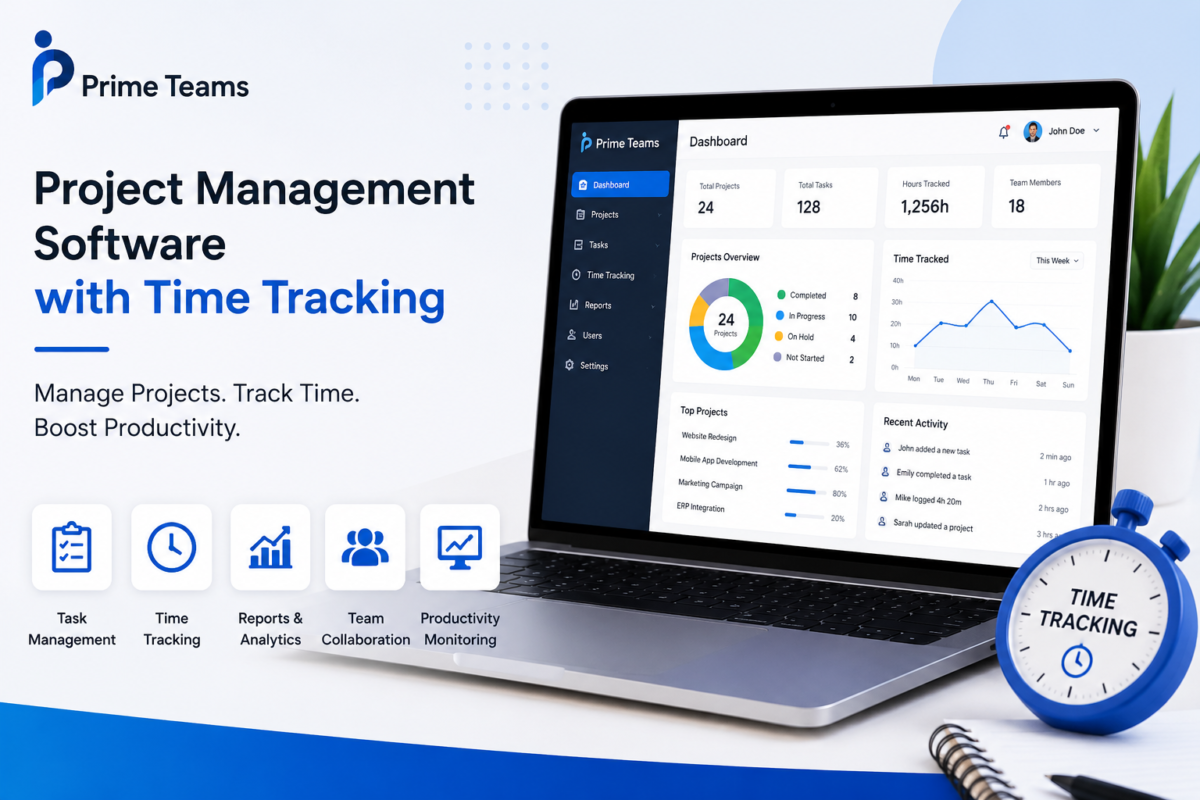
With Prime Teams, projects, tasks, and time tracking were connected in one place. That removed a surprising amount of back-and-forth work.
Instead of asking employees for updates multiple times a day, managers could simply check the dashboard.
Instead of building reports manually, most of the information was already available.
And instead of employees trying to remember how many hours they worked on a task three days ago, time tracking happened while they worked.
Small changes like that made daily operations smoother almost immediately.
Remote Work Made Visibility More Important
Our workflow issues became worse once more people started working remotely.
In an office, managers naturally get visibility throughout the day. Remote work removes that completely.
You can’t walk over to someone’s desk to ask for a quick update. Everything depends on systems and communication.
That’s where having project management and time tracking together became genuinely useful.
Managers could see project progress without constantly interrupting employees. Team members could focus on work instead of repeatedly sending updates.
It created more structure without adding unnecessary pressure.
What Actually Improved
The biggest improvement wasn’t speed.
It was clarity.
People understood priorities better. Managers had fewer surprises. Reporting became easier. Project timelines became more realistic.
A few practical improvements we noticed:
- Fewer missed deadlines
- Better workload distribution
- More accurate project estimates
- Less time spent creating reports
- Clearer accountability across the team
Even client communication improved because we could provide accurate project updates much faster.
Final Thoughts
A lot of companies think productivity problems are caused by employees.
Sometimes the bigger issue is disconnected systems.
When project management and time tracking happen in different places, teams spend too much time chasing information instead of completing work.
Using a platform like Prime Teams helped simplify that process for us. Everything became easier to track, manage, and review because the data stayed connected.
It didn’t magically fix every workflow problem overnight, but it removed a lot of unnecessary friction that had been slowing the team down for a long time.
Leave a Comment